How to Choose a Tree Removal Method – Best Use Cases for Cranes and Bucket Trucks
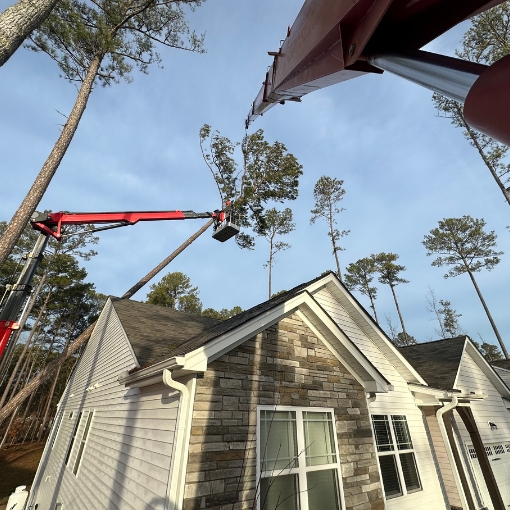
Most homeowners aren’t sure whether a crane or a bucket truck is the better choice for removing a tree on their property. Both pieces of equipment are used in professional tree work, but they serve very different purposes. The safest and most efficient method always depends on the tree’s condition, its location, and how much risk it presents to the structures around it. In this article, we’ll walk through how we determine whether a crane or a bucket truck is the right tool for the job, what homeowners should consider, and the real-world situations where one method clearly outweighs the other. Factors That Determine Which Tree Removal Method Should Be Used Choosing the right equipment isn’t a matter of preference….
Most homeowners aren’t sure whether a crane or a bucket truck is the better choice for removing a tree on their property. Both pieces of equipment are used in professional tree work, but they serve very different purposes.
The safest and most efficient method always depends on the tree’s condition, its location, and how much risk it presents to the structures around it.
In this article, we’ll walk through how we determine whether a crane or a bucket truck is the right tool for the job, what homeowners should consider, and the real-world situations where one method clearly outweighs the other.
Factors That Determine Which Tree Removal Method Should Be Used
Choosing the right equipment isn’t a matter of preference. It’s a matter of safety, access, and structural risk. When we evaluate a tree, we consider several factors before deciding whether the crane or the bucket truck is the safest and most efficient choice.
1. Structural integrity of the tree
This is the first and most important factor.
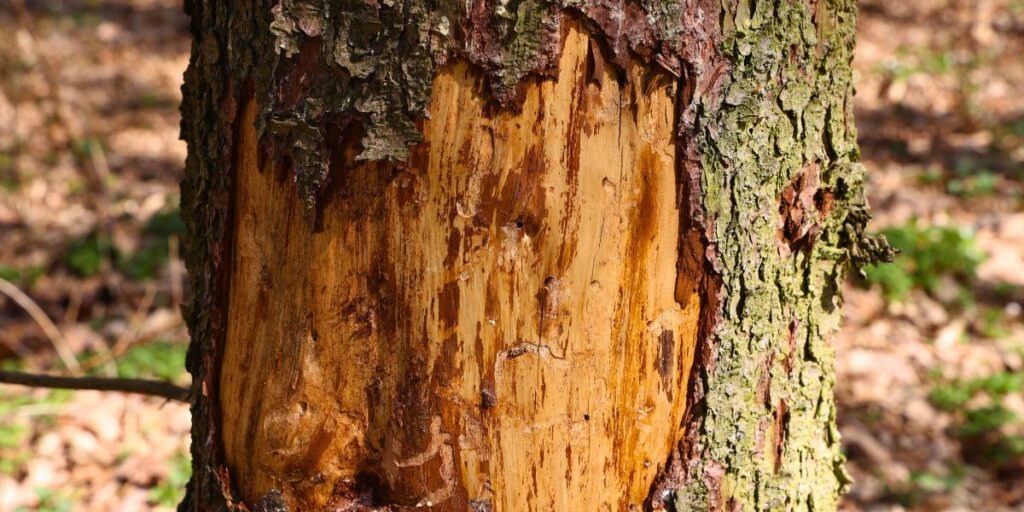
If a tree is dead, rapidly decaying, hollow, splitting, or shedding limbs, we avoid climbing it—and often avoid placing a bucket truck operator into unsupported parts of the canopy. In these cases, the crane allows us to lift pieces from above without relying on the tree to hold weight or anchor equipment.
Trees can become unsafe to climb far sooner than most people realize. Depending on the cause of decline, the wood can deteriorate within 60–90 days of losing leaves. A crane becomes the obvious choice when the tree’s structure can’t be trusted to support a person or rigging system.
2. How directly the tree overhangs a structure
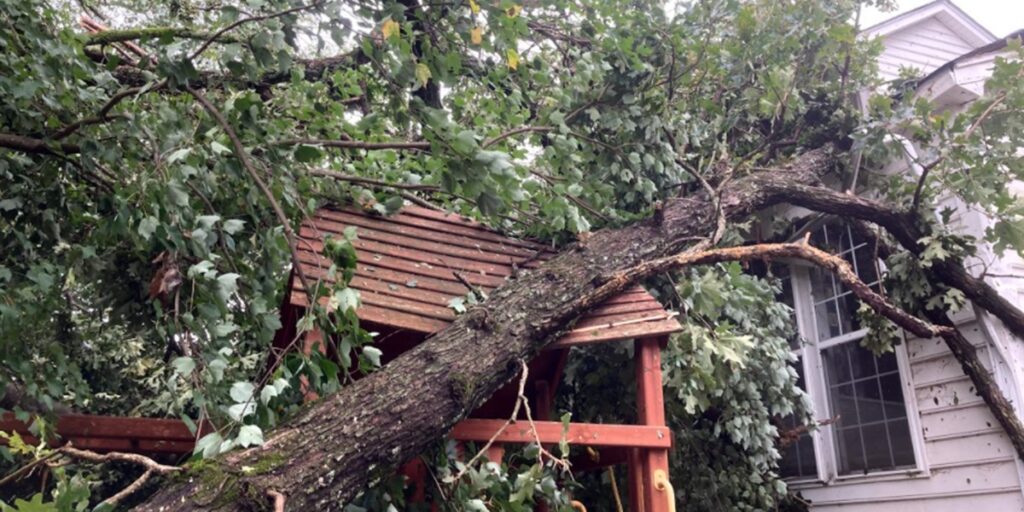
If the tree extends over a home, garage, pool, fence, or any hard-to-protect area, we prefer using a crane because it allows us to lift sections vertically and move them away without letting anything fall or swing.
A bucket truck still requires the cut piece to descend under control, which means:
- More rigging
- Smaller cuts
- More time
- Higher risk of contact with the structure
If a homeowner wants to avoid any chance of property damage, the crane almost always becomes the best method.
3. Access and property layout
Access determines a lot. We look at:
- Gate width
- Driveway strength
- Terrain slope
- Overhead obstructions
- Soft or landscaped ground
A bucket truck needs stable access, usually from the driveway or the street. A crane can sometimes reach from the roadway, but in tight neighborhoods or small lots, only a compact crane or aerial lift may fit safely.
One transcript example describes a backyard setup where we had inches to spare. A bucket truck would never have fit, but the compact crane made the job possible.
4. Homeowner priority: speed or minimal impact
Some homeowners want the fastest possible removal. Others want the least lawn disruption. Each tool shines differently:
- Cranes: Fastest overall removals with minimal disturbance to the property since material is lifted cleanly out of the canopy.
- Bucket trucks: Excellent for pruning, selective removals, or when the tree is sound and access is straightforward.
If the goal is to avoid disturbing the yard or structures, cranes almost always win.
5. Efficiency and final cost
Many people assume a crane will be more expensive. In reality, it’s often the opposite. A crane can remove a tree that would be a full day’s work, by climbing or bucket access, in just a few hours.
Fast work = fewer labor hours.
Fewer labor hours = similar or lower cost.
This is why we never recommend equipment based on price alone. We recommend the method that avoids risk and provides the best overall value.
Why some trees are safer to remove with a crane instead of a bucket truck
Not all trees are candidates for crane removal, but some trees absolutely require it.
1. Dead or severely decayed trees
A bucket truck lets us reach the canopy without climbing, but it still requires the tree to remain structurally stable enough to withstand cuts, movement, and rigging. A compromised tree may shear, split, or collapse under stress.
A crane removes this risk because:
- The operator controls the weight
- The piece is supported before it is cut
- No load transfers through unsafe parts of the tree
This eliminates the most dangerous parts of tree removal: unpredictable weight shifts and shock loads.
2. Best Equipment for Tree Removal in Tight Spaces
When a tree sits between garages, near power lines, or directly behind a house, bucket truck access may be impossible or unsafe. A crane allows us to carefully lift pieces up and out without disturbing anything below.
One example from the transcript described a Beech tree leaning over both a home and high-voltage power lines. The bucket truck was used only to create space; the crane handled the actual removal, once the area was safe.
3. Trees with long horizontal limbs
Sometimes a bucket truck simply can’t position the operator close enough to make controlled cuts. A long limb over a pool or patio may not support a climber, and the bucket might not reach the outermost tips safely.
A crane allows us to secure and lift the limb without stressing it with additional weight.
4. Trees in declining health near property structures
If failure is likely, we eliminate unnecessary delay and choose the crane immediately. This protects both property and people.
When a bucket truck is the better choice
While cranes are essential for high-risk or technically challenging removals, bucket trucks are extremely valuable in other scenarios:
Great for:
- Target pruning
- Limb removal near roofs
- Clearing limbs from siding or gutters
- Trimming around security lights
- Commercial pruning for HOAs
- Trees that are structurally sound but inconvenient for climbing
A bucket truck allows us to work efficiently on healthy trees or trees that require selective cuts rather than full removal.
How homeowners can tell which method they might need
You may need crane removal if:
- The tree is dead, hollow, or losing limbs
- The tree leans over your home or garage
- The tree grows in a tight space
- A climber cannot safely enter the canopy
- Protecting your property is a high priority
You may be fine with bucket truck removal if:
- The tree is healthy and structurally sound
- The job involves pruning rather than full removal
- Access from the driveway or street is open
- The limbs do not extend over sensitive structures
Ultimately, the assessment must be done by a qualified team on-site. Every tree is unique, and the safest method depends on many subtle cues: wood condition, weight distribution, root stability, and more.
Homeowners shouldn’t have to guess whether a crane or a bucket truck is the right choice—that’s our job. By understanding when and why we select specific equipment, you get a clearer picture of how we protect your home, your yard, and our crew on every project.
Choosing the correct method isn’t about using the biggest machine or the flashiest tool; it’s about matching the safest approach to the specific situation. Some trees absolutely require a crane. Others are far more efficient to handle with a bucket truck. And in many complicated cases, we use both tools together.