How Does Crane Tree Removal Work – Discover the 6-Step Crane Tree Removal Process
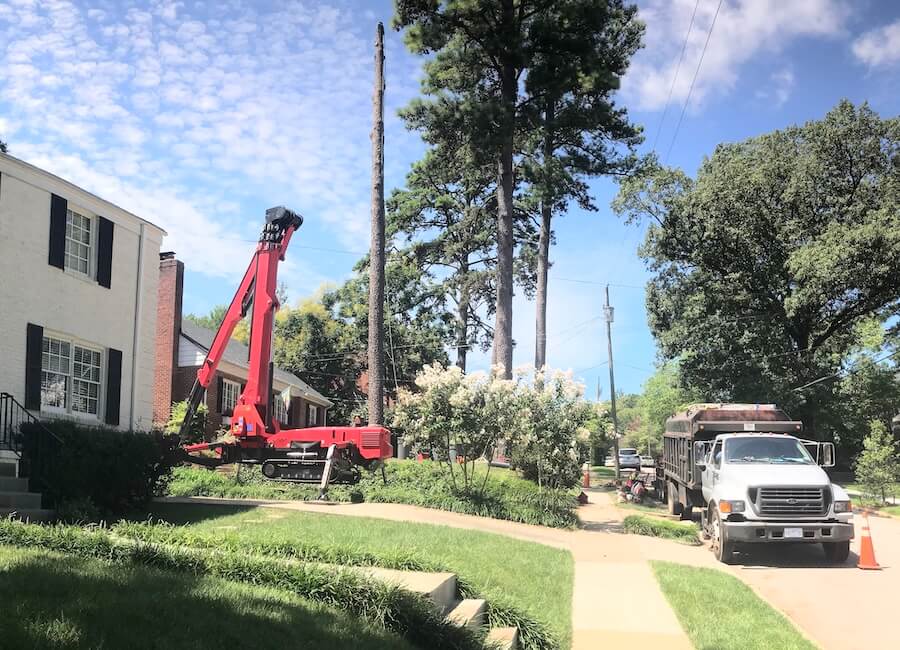
How Does Crane Tree Removal Work? Crane tree removal is a highly controlled technique used to lift and safely remove massive, hazardous, or hard-to-reach trees by lifting large sections up and completely over obstacles like roofs or tight spaces. When homeowners watch a tree removal process for the first time, they often wonder, “How does crane tree removal work?” and they’re surprised by how much planning, coordination, and problem-solving happens before we ever make the first cut. If you’re curious about what goes into one of these jobs from our side of the operation, this is the behind-the-scenes breakdown. For a full walkthrough of what homeowners should expect during crane-assisted tree removal, including the process, cost, and how crane work…
How Does Crane Tree Removal Work?
Crane tree removal is a highly controlled technique used to lift and safely remove massive, hazardous, or hard-to-reach trees by lifting large sections up and completely over obstacles like roofs or tight spaces.
When homeowners watch a tree removal process for the first time, they often wonder, “How does crane tree removal work?” and they’re surprised by how much planning, coordination, and problem-solving happens before we ever make the first cut.
If you’re curious about what goes into one of these jobs from our side of the operation, this is the behind-the-scenes breakdown. For a full walkthrough of what homeowners should expect during crane-assisted tree removal, including the process, cost, and how crane work compares to bucket truck removal, we’ve covered that separately.
Crane removals are among the safest and most controlled methods we use, but they require a level of preparation that most people never see. Our goal is always the same: remove the tree efficiently while protecting your home, your landscape, and everyone on site.
Why We Choose a Crane in the First Place
We don’t bring a crane just because it looks impressive. We bring it because it’s the safest and most efficient choice for specific scenarios that traditional methods can’t handle cleanly.
Dead or decaying trees that can’t support a climber
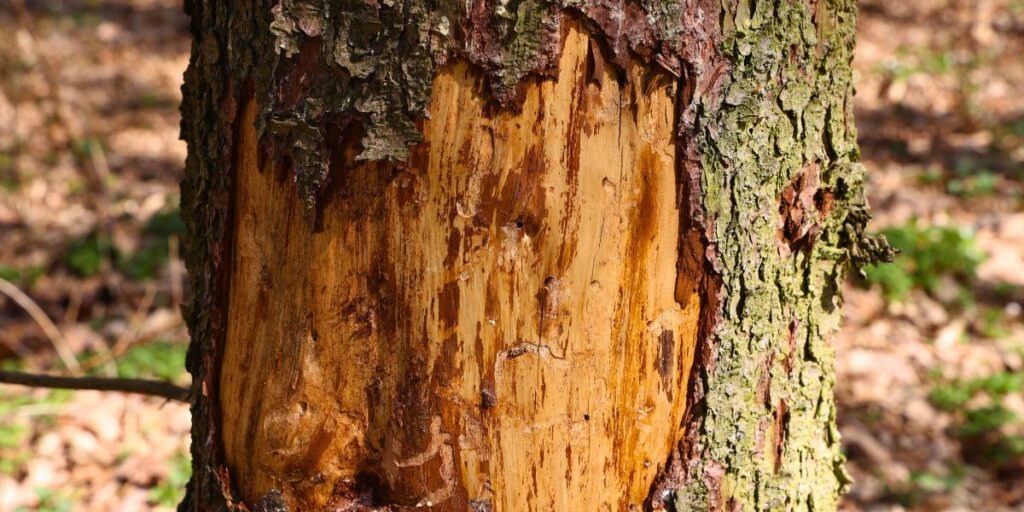
When a tree dies, it begins to decline much faster than most people expect. Depending on the cause, the wood can lose structural integrity within as little as 60 to 90 days. A dead tree may look solid from the outside, but internally it can be soft, brittle, or hollow. If we were to climb it, it might not hold our rope, our gear, or our weight.
In cases like this, the crane allows us to remove sections without relying on the tree itself for support.
Trees overhanging homes, garages, or tight spaces
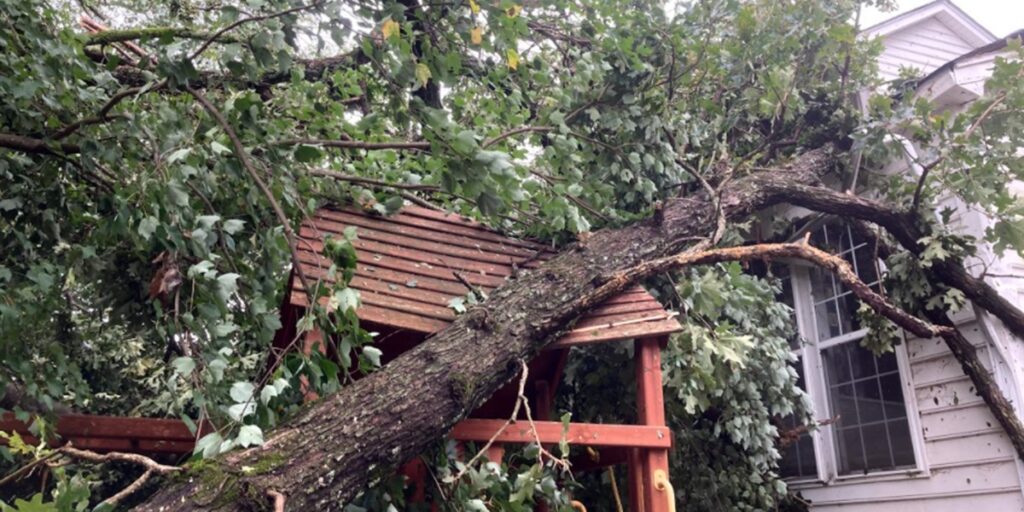
If a large tree extends over a house, trying to climb it and lower pieces traditionally would require taking extremely small cuts to avoid swinging branches toward the roof. That adds time, risk, and unnecessary complexity.
With the crane, we lift the piece straight up and float it over to a designated landing zone. No impact to the structure, no surprises.
Limited access or difficult terrain
Some properties don’t have enough room for our trucks, or the terrain makes traditional rigging unsafe. That’s when our compact crane shines. We can maneuver it through narrow driveways or tight backyards, sometimes with only inches to spare.
One memorable job involved removing a hardwood tree that leaned over both a home and high-voltage lines. The crane needed to be positioned under part of the canopy, which meant we used our bucket truck first to clear enough space for a safe crane setup. Without both tools working together, the removal would have been extremely challenging.
How We Prepare for a Crane Setup
Most of the work during a crane removal happens long before we make the first cut. Proper preparation is what makes the actual removal look smooth and effortless from the street.
1. Equipment positioning and property protection
We start by talking with you about what matters most: your lawn, your driveway, your landscaping, any areas you want us to avoid. Protecting your property is a priority. Depending on the weight of the equipment, we may put down:
• Heavy-duty plastic matting
• Wood mats
• Multiple layers of cribbing
• In some cases, up to 10 inches of timber
Some days we use a few sheets; other days, we use nearly a tractor-trailer load. The goal is always the same: move equipment in and out with little to no impact on your property.
2. Access evaluation
We evaluate where the crane can safely sit, how much room the outriggers need, and whether the grade is level enough. Most aerial lifts and cranes must be perfectly level before they can be deployed. Because the world isn’t flat, leveling the crane can require significant cribbing and adjustment. That work takes as long as it needs to.
3. Choosing the right crane for the job
We own multiple cranes, each suited for different conditions:
• A large crane for big lifts where space allows
• A compact crane for tight residential settings
• Access to additional equipment when the job calls for it
Not every company has this range of options. Having choices means we match the equipment to the job, rather than force a single method onto every situation.
4. Creating a landing zone
Every crane removal has two parts: the pick (lifting the tree section) and the landing zone (processing that section on the ground). The size and shape of the landing zone determine how large each pick can be. If space is tight, the picks are smaller. If there’s a wide-open driveway or street, we can work faster with larger sections. Getting this right before the crane goes up is one of the most important decisions we make on site.
How Our 6-Step Crane Tree Removal Process Works
To minimize property risk, our professional crew dismantles a tree from top to bottom, using a crane to lift and safely move heavy branches and trunk sections over obstacles like homes and power lines. This strict 6-step crane tree removal process ensures total control over every single pick from setup to final cleanup.
1. Site inspection and crane setup
Before any cutting begins, we assess the tree’s weight, structural integrity, and surrounding obstacles. The operator then positions the crane, levels the machine, and extends heavy-duty outriggers onto protective matting to safeguard your lawn or driveway.
2. Securing the first pick (Rigging)
Once the landing zone is clear, a climber or bucket operator ascends the canopy to secure heavy-duty rigging lines to the first section of the tree. If the tree is structurally compromised, these initial picks are intentionally kept small.
3. Applying tension to the load
Before the chainsaw ever touches the wood, the climber signals the crane operator to apply tension. This removes all slack from the lines so the crane is fully supporting the weight of the section ahead of the cut, preventing any unpredictable shifting.
4. Cutting and lifting tree sections
The climber executes precise directional cuts to sever the branch or trunk section. Once separated, the piece remains completely suspended by the crane. The operator then lifts the heavy section straight up and away from the home without any swinging or dragging.
5. Controlled lowering to the landing zone
The operator guides the piece through a precise flight path to the designated landing zone. Our ground crew receives the load, stabilizes it, and safely disconnects the rigging so the crane can return for the next pick.
6. Processing and final site cleanup
As sections come down, the ground crew immediately processes the material:
- Removing the limbs and running brush through the chipper.
- Sorting the wood by type and size (mulch, firewood, or saw logs).
- Recycling 100% of the organic material we remove.
Once the final trunk section is down, we clean the site thoroughly, blow off hard surfaces, and leave your property in pristine condition.
Crane-assisted tree removal may look like a straightforward lift-and-drop operation from the street, but there’s a tremendous amount of planning and expertise behind every pick. From evaluating tree health and selecting the right equipment to leveling the crane and managing the landing zone, our job is to make sure the process is controlled from start to finish.
We choose a crane not because it’s impressive, but because in the right situation, it’s the safest, most efficient, and least disruptive method available. If you’d like to understand more about crane-assisted tree removal, including what it costs and how it compares to other methods, we’ve put together a full guide for homeowners.