How Much Does Pine Tree Removal Cost in Raleigh?
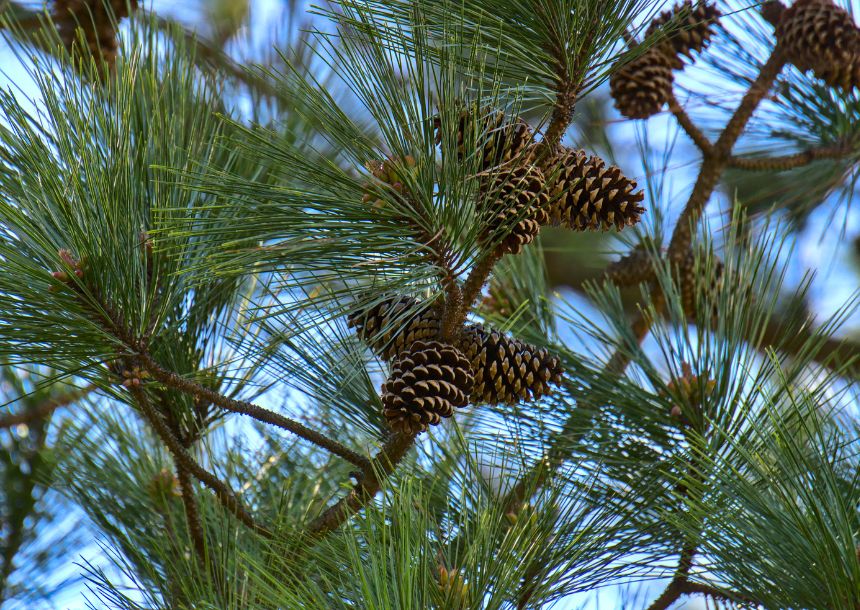
How Much Does Pine Tree Removal Cost in Raleigh? If you’ve been searching for pine tree removal prices and come away more confused than when you started, you’re not alone. The ranges you’ll find online vary wildly, and most of them don’t reflect what you’ll actually pay in the Raleigh market for a mature Loblolly pine in a residential yard. Pine tree removal costs between $400 and $1,500 per tree as a national average, but in Raleigh, where Loblolly pines routinely reach 80 to 115 feet and often grow close to structures, the real question isn’t the size of the tree. It’s the complexity of the job. This guide breaks down what goes into a pine tree removal quote in…
How Much Does Pine Tree Removal Cost in Raleigh?
If you’ve been searching for pine tree removal prices and come away more confused than when you started, you’re not alone. The ranges you’ll find online vary wildly, and most of them don’t reflect what you’ll actually pay in the Raleigh market for a mature Loblolly pine in a residential yard.
Pine tree removal costs between $400 and $1,500 per tree as a national average, but in Raleigh, where Loblolly pines routinely reach 80 to 115 feet and often grow close to structures, the real question isn’t the size of the tree. It’s the complexity of the job.
This guide breaks down what goes into a pine tree removal quote in the Raleigh area, what most homeowners don’t account for, and why the lowest bid is rarely the least expensive option when all costs are factored in.
Why Pine Tree Removal Pricing Is Hard to Pin Down
Most cost guides open with a price-per-tree table and leave it at that. The problem is that there is no such thing as a price per tree or a price per pound for tree removal work. Pricing that works that way is usually designed to make a job sound more affordable than it is by averaging small trees against large ones.
What tree removal is actually based on is time, equipment, and the complexity of how the work needs to be done. A 90-foot Loblolly pine growing in an open field with nothing around it is a very different job from the same tree growing ten feet from a roofline with power lines on one side and a fence on the other, even though they’re the same tree.
The right way to evaluate a tree removal quote is to find out not just what tree is being removed, but how it is going to be removed. A well-trained professional will walk the site, assess every obstacle, and explain the approach before giving a price. A quote based on a photo or a quick, over-the-phone description of the tree is almost always a quote for the fastest removal, not the most careful one.
Cost to Remove Pine Trees – General Price Ranges
With that context in place, here are the general ranges you’ll see in the Raleigh-Durham market. These reflect national benchmarks and local market conditions. Your actual quote will depend on the factors covered in the next section.
| Tree Size | Height | Typical Price Range | Notes |
|---|---|---|---|
| Small Pine | Up to 30 ft | $300 – $500 | Young trees, easy to drop |
| Medium Pine | 30 – 60 ft | $600 – $1,200 | Often requires climbing and sectional cutting |
| Large Pine | 60 – 80 ft | $800 – $2,500 | Heavy equipment, increased labor risk |
| Extra-Large Pine | 80 ft+ | $1,160 – $4,500+ | Crane or specialized rigging typically required |
A few important Raleigh-specific notes on these ranges: Raleigh Tree Service has a service minimum of $750, and most projects (even smaller ones) run north of $1,500 once the full scope of the job is factored in. The lower end of national ranges reflects very small or straightforward removals that are less common in established Raleigh neighborhoods where trees have had decades to grow.
What Are the Primary Price Factors for Pine Tree Removal?
The height of the pine tree is the starting point, but it’s rarely the whole story. These are the factors that move a quote up or down once a professional is actually on your property.
Location and Accessibility
A pine tree near power lines, fences, or overhanging a structure requires slower, more precise work, typically rigging and sectioning rather than a straight drop. Expect a 25% to 50% price increase for trees in tight or constrained locations. In some cases, a crane is the right tool. It adds its own cost, but can actually make the overall job faster and safer when the alternative is hours of careful rigging by hand.
Equipment Required
Not every job needs a crane, but when one is needed, especially for very large pines, trees close to structures, or removals where there’s no clear drop zone, it changes the cost structure significantly. Crane rental and operation adds cost, but it also eliminates the risk of controlled drops going wrong in tight spaces. The right equipment for the job is always less expensive than repairing damage caused by using the wrong equipment.
Tree Condition
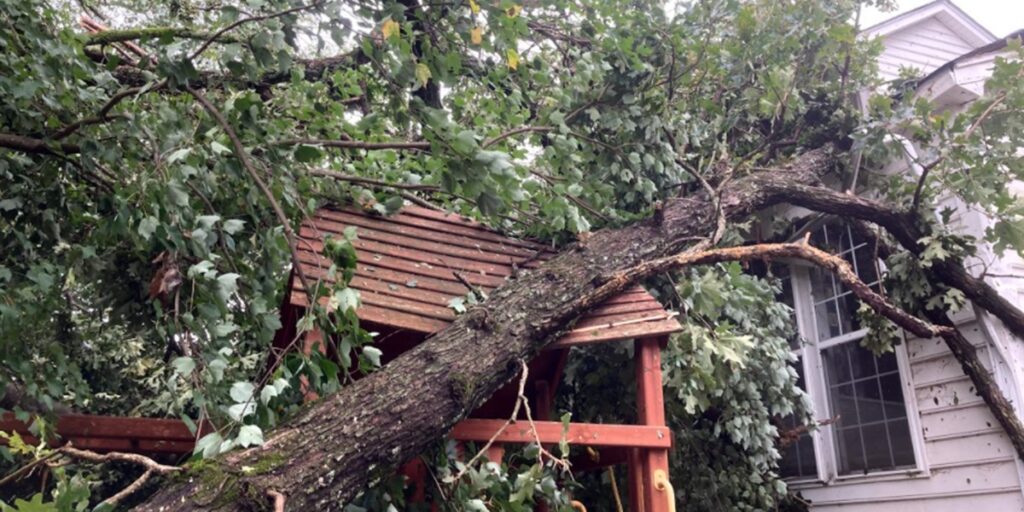
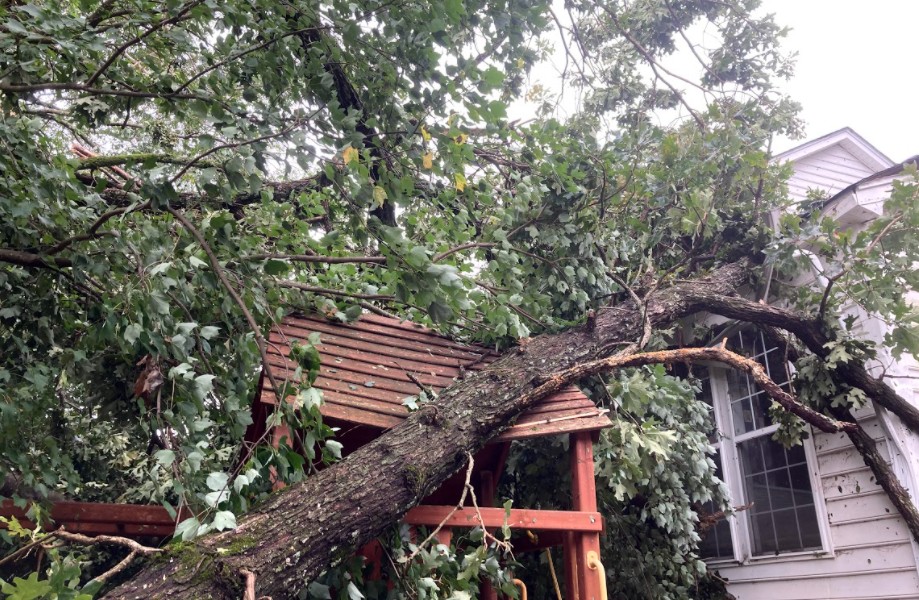
Dead, diseased, storm-damaged, or leaning pines are more dangerous to remove than healthy trees. The wood is unpredictable, the structural integrity is unknown until you’re in the tree, and the risk profile for the crew is higher. That translates directly into higher labor rates. A completely fallen tree is one of the cheaper removals, because the hazard is already resolved.
Crew Experience and Training
This is a factor that doesn’t show up in a quote comparison, but absolutely shows up in the outcome. An experienced, well-trained crew works more efficiently and with greater precision around obstacles. A crew that hasn’t been properly trained may be less expensive on paper, but creates more risk of incidental damage to landscaping, irrigation, structures, and neighboring trees.
The Hidden Cost Most Homeowners Don’t Account For
Here’s a scenario worth thinking through carefully before you accept the lowest quote.
If you paid $1,200 to have a pine tree removed and another company quoted $2,500 for the same tree, it’s tempting to feel like you saved $1,300. But if the tree is dropped across a freshly sodded lawn containing an irrigation system, the repair costs for the irrigation and the lawn restoration can easily exceed that $1,300 — turning your “savings” into an additional expense.
This is what the tree removal industry calls the hidden cost: not what you pay to remove the tree, but what you pay to restore the property afterward. A detailed quote that describes exactly how the work will be done (which direction the tree comes down, how debris is staged, what equipment enters the yard and where) is the only way to evaluate whether a lower price actually represents better value.
If a quote does not include a detailed description of the removal approach, it’s a safe assumption that the work will be performed in the fastest way possible. Fast is not always careful, and in a tight residential yard, the difference matters.
Cost of Large Pine Tree Removal: How Removing Multiple Trees Saves You Money
One of the most counterintuitive things about large pine tree removal is that removing more trees at once often costs significantly less per tree than removing them one at a time.
The reason is how the fixed costs of a job are distributed. When a crane is required, there’s a setup cost, a transport cost, and a minimum time commitment that applies whether the crane is on site for one tree or five. Those costs are baked into the first tree removal. Every additional tree on the same job only adds the incremental time required to remove it, not another full setup fee.
The same principle applies to crew mobilization. Getting an experienced crew and the right equipment to your property has a cost, regardless of how many trees come down that day. Homeowners who address multiple trees in a single visit routinely find that the per-tree cost drops substantially compared to what they’d pay for separate visits.
If you have several pines you’ve been meaning to deal with, bundling them into one job is almost always the more economical approach. In the Raleigh area, where large Loblolly pines often grow in clusters, that’s frequently an option.
One Advantage Pine Trees Have Over Hardwoods
There’s a financial aspect to pine removal that most homeowners don’t know about and that most cost guides don’t mention: pine timber value.
Pine wood is significantly easier to market than hardwood. Because of that, removal companies can often deduct the timber value from the cost of removing the tree, meaning the wood your pine produces when it comes down has real market value that offsets part of your removal cost.
This effect is most pronounced on larger jobs. Removing a dozen large pine trees can be meaningfully less expensive than removing a dozen large hardwoods of comparable size, partly because of this timber offset. It’s worth asking anyone you get a quote from whether timber value is factored into their pricing.
Additional Costs to Budget For
Most base quotes cover cutting the tree down to a stump. Budget separately for these additional services, which are either optional or situationally required.
| Add-On Service | Typical Cost | Notes |
|---|---|---|
| Stump Grinding | $150 – $500 per stump | Often calculated by trunk diameter |
| Debris Hauling / Chipping | $75 – $250 | Varies by branch volume |
| Log Splitting | $50 – $100 | If you want to keep wood for firewood |
| Tree Removal Permit | $60 – $150 | Required for city right-of-way or some HOAs |
On permits specifically: in Raleigh, permits are generally only required for trees on city right-of-way property or in HOA-governed communities. If the tree is on city property and it’s dead, the city may remove it at no cost to you. It might be worth a call before you pay for removal.
How Much Does Pine Tree Removal Cost? Getting a Quote in Raleigh
The most reliable way to get an accurate number is a site visit from an experienced tree removal professional who will walk your property, assess the tree, identify every obstacle, and explain the removal approach before quoting the job.
When you’re comparing quotes, look for these things:
- A detailed description of how the removal will be performed, not just a price.
- Clarity on what is, and isn’t, included – Stump grinding, debris hauling, and cleanup are frequently add-ons.
- Evidence of insurance and an experienced, well-trained crew – non-negotiable for work near structures.
- An explanation of what equipment will be used and why -a professional will have a reason for every tool choice.
Raleigh Tree Service serves the greater Raleigh area including Wake County, Durham County, and surrounding communities. Every quote includes a site visit, a full assessment of the removal approach, and transparent pricing on what is, and isn’t, included.