How Far Can a Tree Lean Before It Falls?
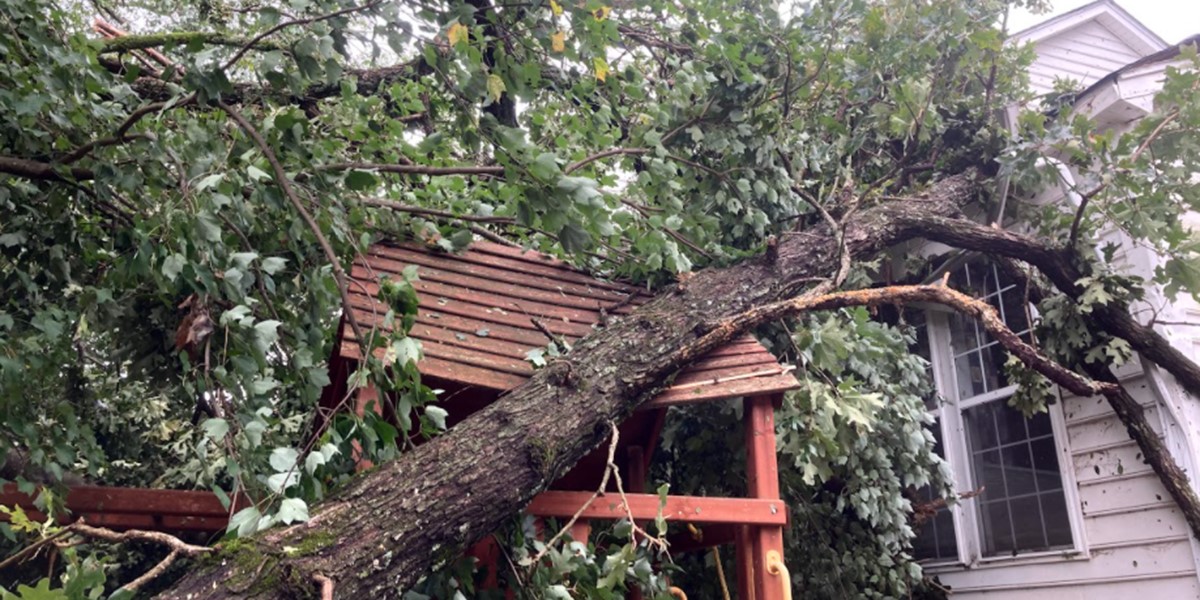
How far can a tree lean before it falls? The short answer is that it depends more on why the tree starts to lean than on a specific angle. A tree that grows at a slant or that has multiple trunks might prove stable. However, when you have a leaning tree that suddenly tilts, you may have an issue with the root system. In this post, the pros at Raleigh Tree Service, Wake Forest’s tree service experts, explain more about this phenomenon. How Far Can a Tree Lean Before it Falls? A tree leaning more than 15 degrees from vertical is generally considered unsafe and at a high risk of falling. At this angle, the tree’s root system and internal structure are…
How far can a tree lean before it falls? The short answer is that it depends more on why the tree starts to lean than on a specific angle. A tree that grows at a slant or that has multiple trunks might prove stable. However, when you have a leaning tree that suddenly tilts, you may have an issue with the root system. In this post, the pros at Raleigh Tree Service, Wake Forest’s tree service experts, explain more about this phenomenon.
How Far Can a Tree Lean Before it Falls?
A tree leaning more than 15 degrees from vertical is generally considered unsafe and at a high risk of falling. At this angle, the tree’s root system and internal structure are often no longer able to support its weight, especially during strong winds, heavy rain, or storms.
Trees that lean beyond 15 degrees frequently have underlying issues such as root damage, soil failure, internal decay, or structural weakness. While some trees grow with a slight natural lean and remain stable for years, a pronounced or increasing lean is a common warning sign of potential failure.
Is any Tree Lean Dangerous?
Not all leaning trees are dangerous. Many trees naturally grow at a slight angle due to sun exposure, slope, or wind patterns and remain stable. A lean becomes concerning when it is sudden, worsening over time, or exceeds the typical safe range of minor tilt.
A tree that recently began leaning or has shifted after a storm is far more likely to fall than one that has leaned the same way for many years. Sudden lean often indicates root plate movement or soil instability, both of which significantly increase fall risk.
Signs a Leaning Tree May Fall
In addition to the angle of the lean, several warning signs suggest a tree may be at risk of falling:
-
Exposed, cracked, or lifting roots at the base
-
Cracks or upheaval in the surrounding soil
-
Hollow areas or visible rot in the trunk
-
Dead or falling branches concentrated on one side
-
Lean that worsens after storms or heavy rain
When these signs appear alongside a lean greater than 15 degrees, the likelihood of failure increases substantially.
When to Call a Professional Arborist
Any tree leaning more than 15 degrees or shifting suddenly should be evaluated immediately. Our certified arborists can help you determine if your tree is simply a ‘character’ tree with a natural tilt or if it is displaying clear signs that a tree needs to be removed. Don’t wait for a storm to decide for you—early intervention can prevent a dangerous fall. A professional assessment can determine whether the tree can be stabilized, pruned, or safely removed before it causes damage to people or property.
Early evaluation is especially important for trees near homes, driveways, sidewalks, or power lines, where a fall could result in serious injury or costly damage.
Why Leaning Trees are Especially Risky During Storms
Wind places additional force on an already unbalanced tree. A leaning tree has a shifted center of gravity, which makes it far more likely to uproot or snap under storm conditions. Saturated soil further weakens root support, increasing the chance of sudden failure even if the tree appeared stable before the storm.
Removing a Dangerous Leaning Tree in Raleigh, NC
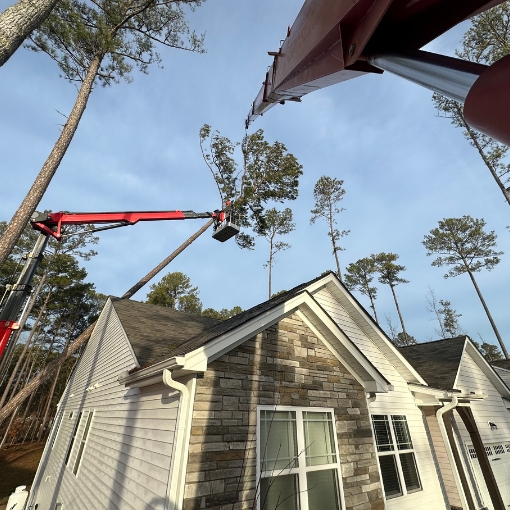
Problem: A homeowner called us because they had a dead tree that was leaning dangerously toward their house. It was only a matter of time before it fell, and they needed immediate help to avoid damage. The tree had already started to lean halfway over.
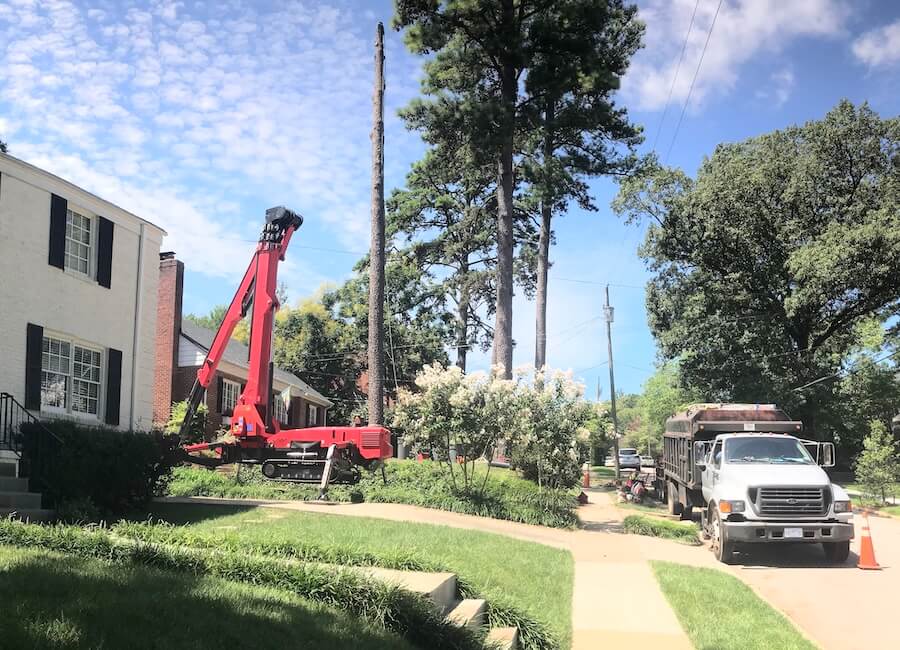
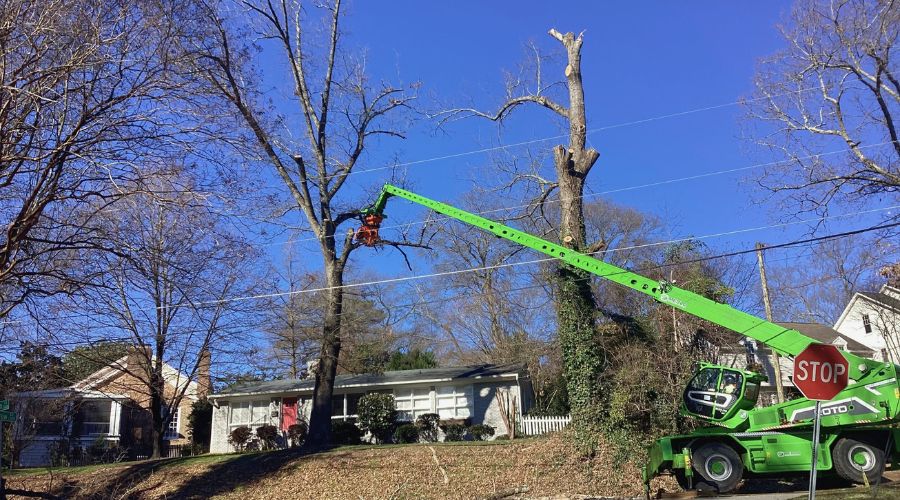
Challenges: This tree was precariously positioned, and we had to carefully remove it in stages to avoid causing any further damage to the surrounding property. We used a crane and manual labor to ensure safe removal without hitting the house.
Outcome: The job was completed in just a few hours, and the homeowner was relieved that the tree was safely taken care of before any damage occurred.
Cost: This emergency removal cost $4,000 due to the delicate work involved.
Contact Us for Advice
Are you wondering, “How far can a tree lean before it falls?” because you have a tilting tree in your yard? Even if it’s not one of the trees most likely to fall, it might pose a hazard. Call Raleigh Tree Service at (919) 889-5783 and schedule a risk evaluation to keep you and your family safe.